ICE TILL SEA

Where Once the Waters · Fifth instalment
Royal Scottish Academy, Lower Galleries
Photographer: Iain Stewart
As the crow flies, the Royal Scottish Academy in Edinburgh stands around two miles from the Firth of Forth at Leith, where tide-gauges provide locally measured sea-level data and show a rise of almost 2.5mm per year (and growing). This rise in sea-level is occurring for various reasons, including loss of far-off polar ice.

In Scotland, and across much of the Northern Hemisphere, we think of ice at this time of year, from November through to March – though it’s clear to see that global warming is changing this outlook. In the Arctic, by contrast, ice has long been a year-round feature that shapes seas, ecosystems and ways of life. Until recently, summer sea ice was a steady presence across the region; now, summers see far less of it, and those seasonal losses carry consequences throughout the year.
As summer ice retreats, the dark, open ocean that replaces it absorbs more sunlight instead of reflecting it back to space. That extra heat amplifies regional and global warming, speeds the loss of land ice, and raises ocean temperatures. Through thermal expansion and increased glacier and ice-sheet melt, this contributes to sea-rise – with consequences for coastlines around the world.
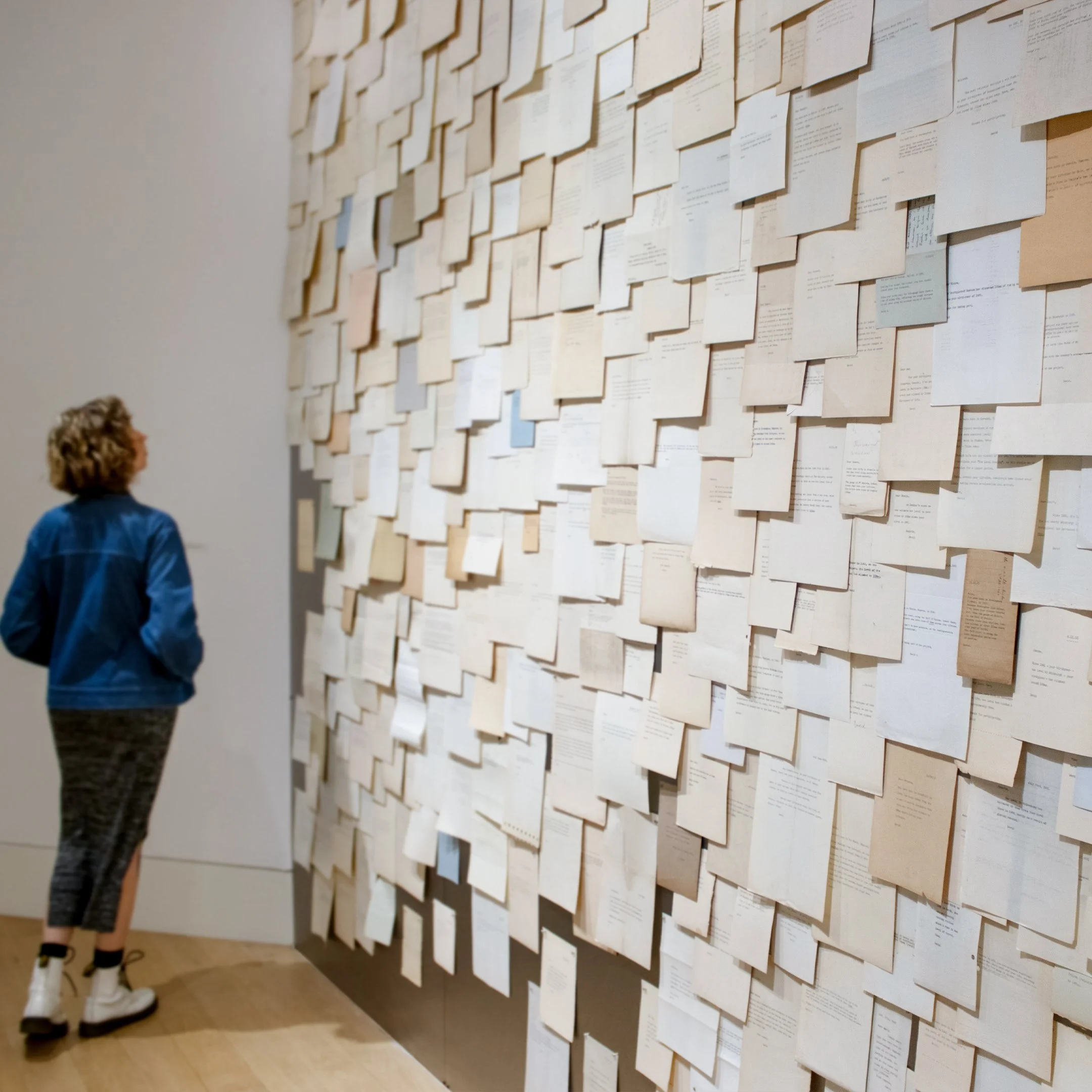
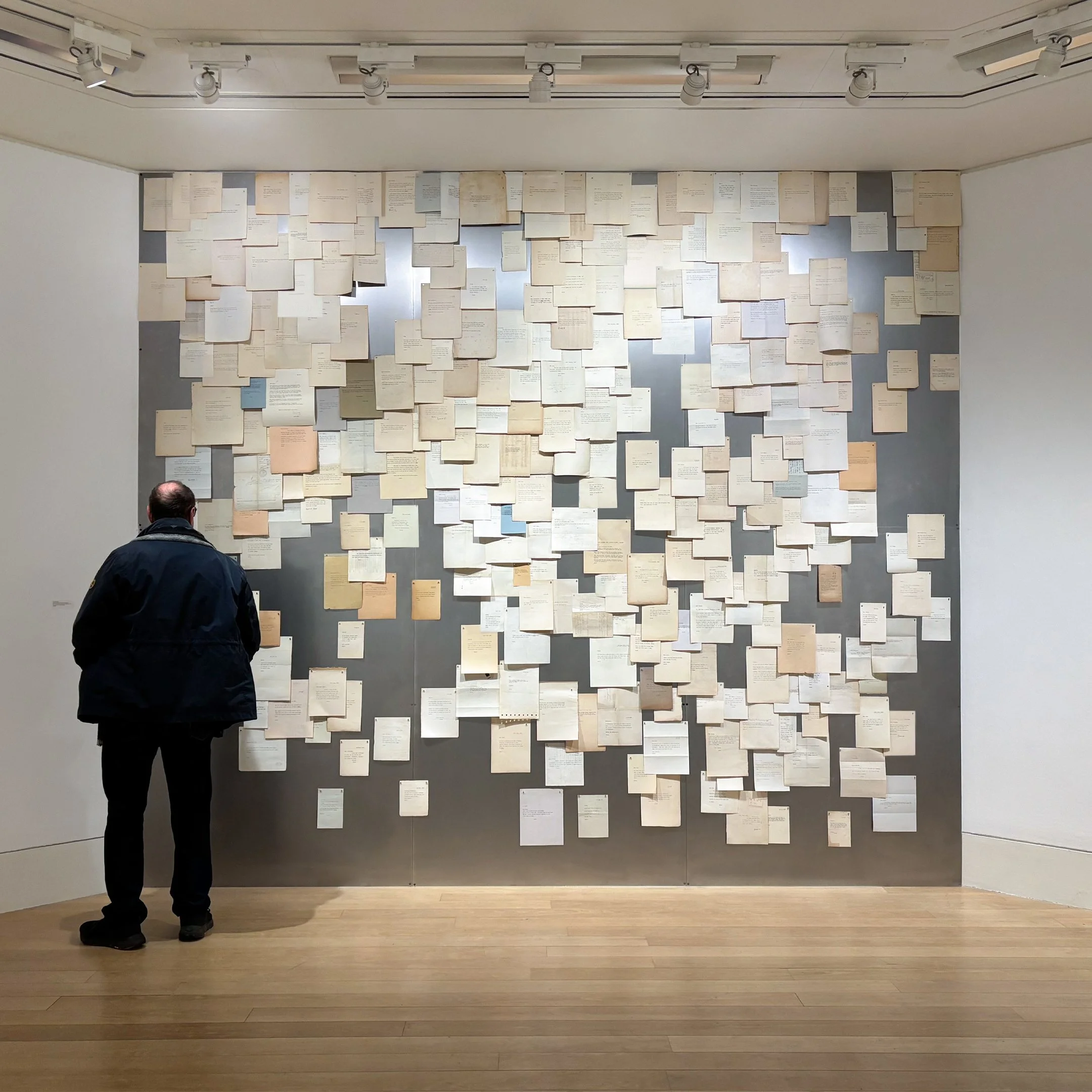
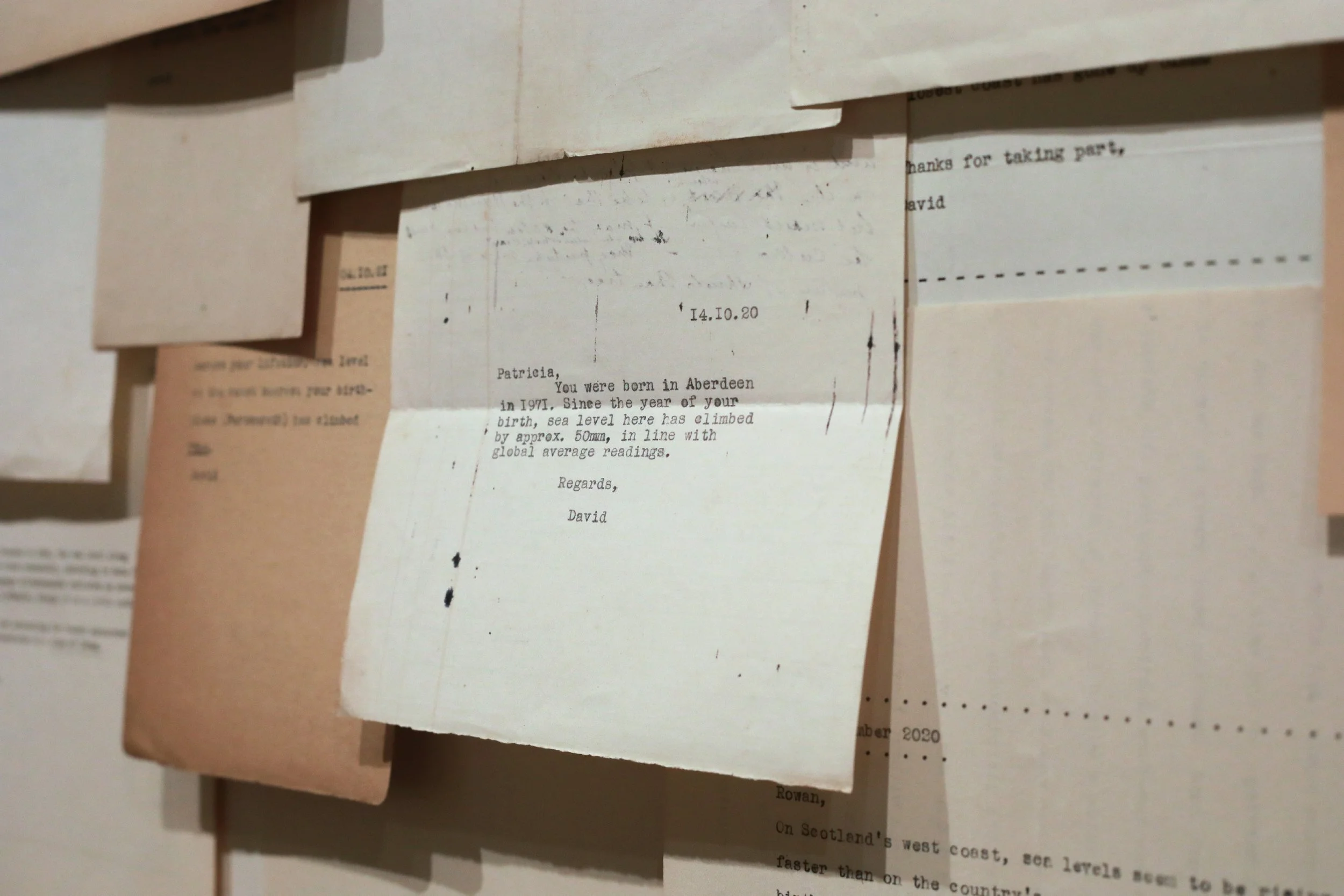
Where Once the Waters features hundreds of letters, typed across five years onto found and antique papers, to real people around the world. Each letter offers a measurement, in millimetres, informing the addressee the volume of sea-change across their lifetimes specific to their birthplaces.
During the exhibition, papers are periodically removed, revealing more of the steel-clad gallery wall. This gradual process mirrors the seasonal disappearance of summer ice and acts as a compressed analogue for the centuries of human activity that have reshaped the planet’s climate – slow, cumulative changes whose impacts are now unmistakable.